Full Conference Agenda
Vendor Check In & Set Up
Grand Ballroom A&B & Grand Foyer
Arrival & Check-In: Breakfast Available
Entract to Grand Foyer
Conference Opening: Protecting Our Future, Healing Our Past
Grand Ballroom A&B
Keynote Speaker - Amanda Erickson | Director producer of “She Cried That Day”
Grand Ballroom A&B
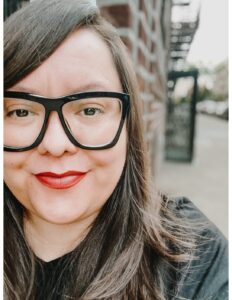
Reclaiming the Frame: Indigenous Women, Our stories, Our power.
View Amanda Erickson and all speaker bios in the “Speaker Names & Biographies” tab
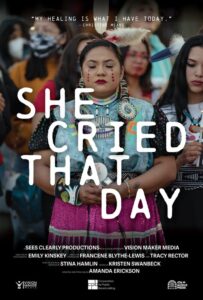
She Cried That Day Film Showing | Directed by: Amanda Erickson - 92min. Documentary
Grand Ballroom A&B
DISCLAIMER: This film includes sensitive content that may be difficult for some viewers. Please engage at your own pace. You are welcome to step out at any time. A grounding space and support staff are available if needed.
Film Description:
She Cried That Day investigates the Missing and Murdered Indigenous Women’s crisis through the lens of one woman haunted by her sister’s unsolved murder. We bear witness as she battles police and societal apathy towards MMIW thus laying bare the complex story of America’s treatment of Indigenous peoples.
She Cried That Day shows us first-hand, how the MMIW crisis affects a family, a State, and the Nation, and will leave you inspired by the strength of Indigenous culture, community, and the women fighting on the frontlines.
VIEW WEBSITE HERE: https://www.shecriedthatday.com/
Programmed Lunch (Lunch Provided)
Grand Ballroom A&B
Restoration & Reflection Break
Grand Ballroom A&B
Conference Closing Day 1: Igniting the Path Forward Through Stories of Healing & Protection
Grand Ballroom A&B
Before you Leave: Conference 2026 Evaluations
Arrival & Check-In: Breakfast Available
Grand Ballroom A&B
She Cried that Day Panel – Storytelling as a Pathway to Legislative Change
Grand Ballroom A&B
Restoration & Reflection Break
Grand Ballroom A&B
Lunch Break & Community Networking: On Your Own
Motivational Speech by James Junes - “Humor Healing”
Grand Ballroom A&B
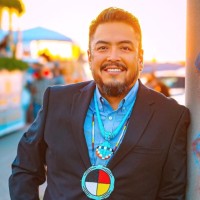
View James Junes and all speaker bios in the “Speaker Names & Biographies” tab
Conference Day 2 Closing: Healing Our Past, Protecting Our Future
Grand Ballroom A&B
Before you Leave: Conference 2026 Evaluations
Speaker Names & Biographies
Amanda Erikson
Amanda Erickson is born for the San Carlos Apache of the White Water Clan on her father’s side. She is the producer and director of the film, She Cried That Day. Before making her directorial debut, Amanda worked as a non-fiction TV Producer for 15 years, where she created compelling programming for networks like: Travel Channel, National Geographic WILD, Investigation Discovery, and CuriosityStream. Amanda is a member of Brown Girls Doc Mafia, Array Crew, and resident Teaching Artist for newportFILM. Through her company, Sees Clearly Productions, Amanda aims to inspire social change by amplifying issues facing Indigenous communities.
James Junes
James June is a member of the Navajo Tribe and resides in Farmington, NM with his Family. He is a motivational speaker, comedian, and entrepreneur/business owner for the past 25 years in performing arts.
Clans: Red Water Clan born for the Bear Clan. Paternal Clan: Water Edge. Maternal Clan: Tangle Clan. Hopi Clan: Road Runner Clan – Hotevilla, AZ
Originally from Red Valley, AZ, born in Shiprock, NM.
James tours internationally and is 30years Sober & Drug Free.
He is a COLON Cancer survivor, twice, survived 2 Battles.
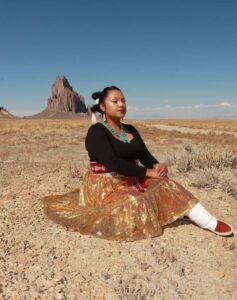
Veronica (Yang) Toledo
Veronica ‘Yang’ Toledo (She/her) is a 24 year old Diné and Chicana Multimedia Artist, Community Organizer and Advocate and Social Media Influencer. Yang was born and raised on the Diné (Navajo) Reservation in New Mexico. She uses her creativity and platform to advocate for social and environmental justice, community organizing and Indigenous culture.
Instagram and TikTok: @indigenousiconyang
*The Jingle Dress is an Ojibwe healing dress. The prayer dance originated a decade ago from a dream from an Ojibwe elder. The sacred dance represents the powerful significance of Indigenous healing, resilience, connection and community strength.
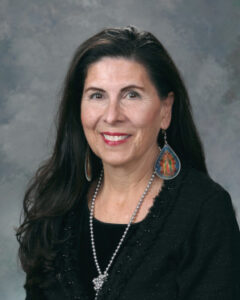
Senator Linda M. Lopez
Senator Linda M. Lopez is a native New Mexican. She was elected to serve in the NM State Senate in 1996 representing District 11 in Southwest Bernalillo County. She is Chair of the Senate Health and Public Affairs Committee and a member of the Senate Rules Committee. She served as Chair of the Senate Rules Committee from 2002-2020. She served as Co-Chair of the Legislative Ethics Committee from 2012-2022. Senator Lopez earned her bachelor’s degree in Business Management from the College of Santa Fe, followed in 1992 with an MBA. She has sponsored anti-racism, equal pay for equal work, funding for domestic violence and sexual assault programs and paper ballots for elections to name just a few. Sen. Lopez serves as a Commissioner to the Office of Family Representation and member of the NM Supreme Court’s Children’s Court Improvement Commission. She recently received the first Annual Legacy Award of Cesar Chavez and Dolores Huerta in 2023. She is a single parent, has a 24-year-old son, Lorenzo and a 13-year-old daughter, Cherish Rose.
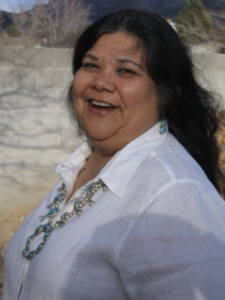
Elena Giacci
Elena Giacci (Diné) She is a historical trauma education specialist and a Anti-Sexual violence advocate with decades of successful training experience with a special consideration to American Indian people, underserved . and diverse communities. She has over 36 years’ experience in the Violence Against Women field and has a B.A. in Criminal Justice. Elena was Chair of the Albuquerque Mayors Anti Domestic and Sexual Violence Task Force where she and members of the task force created the first Albuquerque Police Department National Model for Limited English Policies. Ms. Giacci was co- investigator with Dr. Elizabeth Miller in the research study by the National Institute of Child Health and Human Development: Partner Violence and Reproductive Coercion among Native American Women. Elena was the Faculty Leader on the National Native Project 2.0 in cooperation with a Nationwide organization. She is member of the Governor’s commission on Office of Family Representation and Advocacy (Ofra)and Sheriff’s Office Advisory Board.
Mary Rodriquez
Mary Rodriguez began her law career training as a public defender at the University of Washington Tribal Court Public Defense Clinic and worked as a tribal public defender for several Washington State tribes. Mary became the Director of Advocacy at the Center of Indigenous Research and Justice, and continued practicing tribal public defense. In her current role, as a Program Attorney at the National American Indian Court Judges Association (NAICJA), Mary works on the policy side of tribal courts and programming related to traditional justice and holistic defense. Mary is a former resident of Seattle, having received both her B.A. and J.D. from the University of Washington. Mary currently works remotely for NAICJA and her home base is Los Angeles, CA.
Dr. Peggy Bird
Peggy Bird is of the Sun Clan from Kewa Pueblo, New Mexico. She is mom, grandmother, judge, an advocate/attorney/consultant/human rights activist and works to enhance the sovereignty of indigenous women by ending violence against Native women, both nationally and internationally. Peggy is a co-founder of the Coalition to Stop Violence Against Native Women, Inc., the Native Women’s Advocacy Center, Inc., and the Indigenous Women’s Human Rights Collective, Inc. She is a board member of Tewa Women United, Inc., and NAICJA. She received the National Crime Victims Service Award granted by the U.S. Department of Justice and the Sunshine Peace Award granted by the Sunshine Lady Foundation and the National Coalition Against Domestic Violence. She has been a member of the State Bar of New Mexico since October 1990. She received her Doctorate of Philosophy on May 7, 2018 from Arizona State University.
Johnny McCraige
Johnny Medina-McCraigie (she/her), a member of the Colville Confederated Tribes, brings experience in project management, coalition building, and community-led research. With a Bachelor of Social Work, she has led housing and food justice initiatives in the Denver metro area, advocating for Native and communities of color. Her work in philanthropy has further strengthened her commitment to supporting tribal communities and nonprofits. In her position at NAICJA, Johnny works alongside tribal court grantees, providing support in tribal justice system capacity building.
Outside of work, Johnny enjoys beading, sewing, and being involved in the community.
Hailey Zock
Hailey holds a Juris Doctorate from the University of New Mexico School of Law and Bachelors of Arts in Political Science and Psychology. Prior to joining the Southwest Women’s Law Center, she was a Public Defender in the Bernalillo County Metropolitan Court where she enjoyed advocating for her clients. In her
current role, Hailey provides free civil legal representation, advice, and brief services to Native individuals experiencing domestic violence and intimate partner violence, with a focus on protection orders, child custody, and child support in Tribal Courts across New Mexico. In this work, she actively centers survivor safety, autonomy, and access to justice. Hailey is passionate about trauma-informed advocacy that supports domestic violence survivors with dignity, choice, and respect.
Lisa Howley
Lisa Howley currently supports the Supportive Housing Operations Manager with the Behavioral Health Services Division (BHSD)/Health Care Authority (HCA). She has been an employee of BHSD/HCA since 2014 and began as the Screening Brief Intervention Referral to Treatment (SBIRT) Coordinator until 2017 when She became the Supportive Housing Coordinator and then Supportive Housing Manager in 2021. Her tenure with state government began in 2004, and she has been a state employee for over 20 years. She worked for the Children Youth and Families Department for 9 years. Under CYFD, She was an Investigator of child abuse and neglect with Child Protective Services (CPS) for over a year and a Juvenile Probation/Parole Officer with Juvenile Justice Services (JJS) for 8 years. She has enjoyed the learning and growth involved with state government roles and more specifically the knowledge she has acquired related to housing.
Tanaya Winder
Tanaya Winder is an accomplished author, singer-songwriter, poet, and motivational speaker from the Duckwater Shoshone Nation. Her intertribal heritage includes Southern Ute and Pyramid Lake Paiute lineages. She holds a Bachelor of Arts from Stanford University and a Master of Fine Arts from the University of New Mexico. Winder’s poetry collections include “Words Like Love” and “Why Storms Are Named After People and Bullets Remain Nameless.” She combines storytelling, singing, and poetry to delve into themes of healing, love, and discovering one’s purpose—what she calls “heartwork.” Tanaya emphasizes the importance of storytelling as a form of medicine and encourages individuals to harness their voices as a source of power.
J. Elaine Williams
Elaine Williams is an experienced social worker with over twenty years of experience. She is currently contracting as an ICWA Expert and Social Worker Contractor for the Office of Respondent Parents’ Counsel (ORPC) in Colorado. In addition, the owner of ICWA Consulting Services, LLC. to provide technical support to stakeholders connected to the child welfare system to ensure compliance with ICWA regulations. Her relevant professional experience also includes serving as an Indian Child Welfare Specialist/County Intermediary for the State of Colorado, focusing on monitoring and improving ICWA compliance across county departments, and working as a Permanency Social Caseworker, conducting safety assessments, providing case management, and testifying in court. She holds a Qualified Expert Witness (QEW) certification from the National Indian Child Welfare Association, effective June 2024. As an enrolled Tribal member of Jemez Pueblo, NM, it is her passion to support all areas of ICWA practice. She is also a board member of the Denver Indian Family Resource Center in CO where she supports Indian parents in child welfare cases
Tish Howard
Presenters are Los Lunas High School students from various Native communities. Ms.Tish Howard, Native American Liaison, serves as their mentor.
David Adams
David Adams is the co-founder of Parnall & Adams Law, LLC, a firm that focuses on investigations into civil rights violations, severe injuries, wrongful death, and various forms of Tribal Law. A member of the Sault St. Marie Tribe of Chippewa Indians, David brings a unique dual perspective to his practice, having previously served as an Assistant U.S. Attorney (AUSA) and advocate for justice. During his tenure with the Department of Justice, David spearheaded a pilot initiative under the Office on Violence Against Women, earning formal recognition from U.S. Attorney General Loretta Lynch for his contributions to public safety in Indian Country. Today, David serves as a board member for the New Mexico Coalition of Sexual Assault Programs, the New Mexico Indian Bar Association, and the StrongHearts Native Helpline. David trains around the country on issues involving sovereignty and violent crime and is dedicated to ensuring that court systems serve as a forum for safety and accountability for Indigenous women. He is based in Albuquerque, New Mexico
Karen Watson
Karen Watson is a community activist raising awareness around Missing and Murdered Indigenous Women and Relatives. Karen is an impacted family member who has been integral in raising awareness around the “She Cried That Day” Film, which features the story of her sister Dionne Means, who was murdered in Gallup, New Mexico in 2015. Karen is a powerful voice in raising awareness and sharing resources for impacted families across New Mexico.
Shayashe LittleDave
Sheyahshe Littledave is an enrolled member of the Eastern Band of Cherokee Indians and a co-host of We Are Resilient, an Indigenous-led podcast focused on Missing and Murdered Indigenous People (MMIP), violence against Indigenous women, and the systemic failures that allow these harms to persist. Through case-based storytelling, their work centers the humanity of those who are missing or murdered while honoring the voices of families and communities impacted by violence. Sheyahshe is a domestic violence survivor, published author, and advocate whose lived experience informs the podcast’s trauma-aware and ethical approach to storytelling and advocacy. They use media as a tool for education, accountability, and community awareness, to disrupt cycles of violence and support collective healing across Tribal Nations.
Amanda Richards
Amanda Richards is a Public Information Officer with the New Mexico State Police. With nearly a decade of law enforcement experience, she is responsible for communicating critical public safety information and strengthening transparency between NMSP and the communities they serve. Officer Richards works closely with media partners and leadership on high-profile and sensitive incidents, as well as statewide public safety initiatives. She has played a role in public communication surrounding New Mexico’s alert systems, including the implementation of the Turquoise Alert, which is designed to enhance response efforts for missing and endangered Indigenous persons.
Sharnen Velarde
Sharnen is an enrolled member of the Jicarilla Apache Nation in Dulce, New Mexico, and is half Navajo from Hogback, New Mexico. She holds a Bachelor of Social Work and Master of Social Work from New Mexico Highlands University. As the Domestic Violence Program Manager, she oversees program operations focused on domestic violence, sexual assault, prevention, and crisis intervention at Jicarilla Behavioral Health. For the past nine years, she has been a fierce advocate for survivors in her community, providing direct services and support. In 2019, Sharnen was appointed by Governor Michelle Lujan Grisham to serve on the New Mexico Missing and Murdered Indigenous Task Force. She also plays a vital role in the Sexual Assault Response Team (SART), ensuring a trauma-informed, survivor-centered response to sexual violence. Sharnen’s passion lies in giving a voice to victims and survivors, offering care, safety, and support to those in need.
Malneath Vong
Malyneath Vong is the founder of Project Broken Arrow, an initiative under The Project Foundation focused on prevention, awareness, and community-informed responses to violence affecting Native communities in the Gallup region and surrounding Tribal Nations. As a Cambodian American from a refugee family who resettled in the United States after fleeing genocide, her work is informed by lived experience and a commitment to culturally responsive, healing-centered approaches. Malyneath has served for nearly a decade with the Long Beach Human Trafficking Task Force in one of the nation’s largest cities. In New Mexico, she has supported coordination efforts to connect Native victims to shelter and services across jurisdictions, including assisting with a Feather Alert response involving the return of a Tribal victim from Los Angeles to Oklahoma, and coordinating shelter support for an identified victim in Gallup requiring placement in Farmington.
Layla Enciso
Healers of Tomorrow
To respect privacy and safety, we are not including a biography for our youth speakers. We are honored to have their voice and presence as part of this gathering.
Ada Melton
Ada Pecos Melton (Jemez) is an expert in justice, victimization, public policy, and program development with over three decades of experience. Her work centers on tribal justice, health, social services, education systems, violence against Native women, human trafficking, victim services, and community wellness. She has led numerous national, regional, and local studies involving Native women, children, and youth. She offers technical assistance on strategic planning, code development, justice systems, trauma-informed and culturally grounded practices, and data and information sharing with tribes nationwide. Her public service includes: Director of the AI/AN Desk at the U.S. Office of Justice Programs; Court Administrator/Chief Probation Officer at Laguna Pueblo; and adjunct faculty. She has authored many reports, studies, and articles, establishing her as a leading voice in Native-focused research and practice. She holds a Master’s in Public Administration and a Bachelor of Arts in Criminal Justice from the University of New Mexico.
Renae Swope
Renae Gray (Diné) is an advocate and educator dedicated to empowering Native Transgender and TwoSpirit individuals. Holding a degree in Community Health Education and Sociology, her work bridges public health and social justice. Renae served on the Indigenous Outreach Team for the U.S. Trans Survey and has researched health indicators among Native women in sex work. A compelling speaker, she has trained diverse groups, including the FBI and hospital staff, on culturally informed care and LGBTQ2S+ history. Having navigated systemic discrimination and violence, Renae’s advocacy is a testament to her resilience. She is committed to bridging systemic gaps and creating an equitable world where the voices of Indigenous transgender people are accurately represented and protected.
Misty Flowers
Misty (Thomas) Flowers is a member of the Santee Sioux Nation and a descendant of the Tlingit of Alaska. She brings 20 years of child welfare experience and is recognized for her leadership in Indigenous advocacy. She holds bachelor’s and master’s degrees from the University of Nebraska–Lincoln and has served in key roles with the Nebraska Indian Child Welfare Coalition and the Honoring Indigenous Families Research project. She currently serves as the senior child welfare fellow at the National Indian Child Welfare Association (NICWA). During her tenure with her Tribe, she helped establish a Domestic Violence Shelter and is a survivor of DV and SA. Her honors include being named a White House Champion of Change for DV Awareness, University of Nebraska Alumni Association’s Early Achiever Award, Milo Mumgaard Emerging Leader Award, Jackie Gaughan Multicultural Center Wall of Fame, and NICWA Organizational Member of the Year Award.
Tobi Jolly
Tobi Jolly is a member of Waskaganish Eeyoud and Mocreebec Eeyoud – a James Bay Cree of the Eeyou Istchee. She is also the proud daughter of a Metis mother. She is the child, niece, grandchild, and great grandchild of Indian Residential School Survivors. Currently Tobi works for Siloam Mission in Winnipeg as the Director of Community Wellness, bringing cultural, spiritual, and wellness programming to those experiencing homelessness in Winnipeg. Prior roles have included familial and community support positions for individuals, families and communities impacted by Missing and Murdered Indigenous Women, Girls, and 2S/gender diverse relatives. Tobi has sat as a member of Giganawenimaanaanig for several years, with a focus on collaboratively decolonizing Justice and law enforcement spaces for Indigenous families of MMIWG2S+.
Victoria Murphy
Victoria L. Murphy originally joined Animal Protection New Mexico (APNM) in 2012 as the Animal Shelter Program Manager, and is currently the Program Director, responsible for the Equine Protection Fund & the Companion Animal Rescue Effort (CARE & Co-Sheltering Program). Victoria brings a wealth of experience and enthusiasm to her work, having held positions in both animal sheltering and humane law enforcement services in New Mexico for various agencies over the years. From 2012-2014, Victoria was responsible for developing new ways to maximize New Mexico animal shelters’ ability to humanely care for companion animals, increase adoptions and spay/neuter, reduce euthanasia, and increase funding and training access. She also served on New Mexico’s Animal Sheltering board responsible for humane euthanasia rules & requirements in New Mexico animal shelters. She understands the needs of companion animals, equines and their families in both domestic violence situations, as well as people seeking emergency medical or financial assistance for equines. Victoria uses her diverse knowledge and skills to connect and provide direct aid and assistance to communities, families, animals and animal adovcates across New Mexico.
Tara Trudell
As a Creative Healing Consultant and Artist, Tara Evonne Trudell, (Santee Sioux/Rarámuri/Xicana) weaves multiple mixed media of handmade paper beads, poetry, photography, film, and audio components into her work to express her creative visions that address the many social issues she sees as a continuance of generational trauma on women and children. Tara makes beads from the many reports, research, data, and survivor stories to amplify their voices and resources that need to be shared in all communities. Tara offers her personal experience of being a grandmother, granddaughter, daughter, mother, sister, and one day a future ancestor as an opening to bear witness to others who are struggling with their own intergenerational abuse and trauma. Tara shares her own healing journey for others to relate and join her in the navigation of changing this painful and harmful narrative. It is through this guidance of spirit reclamation and empowering personal energy that can come from our own making prayer beads that address the many colonial and oppressive narratives in a manner that dates back to 100,000 BC when beads were first discovered. It is from our own history, words, images, and worlds can we reshape and reclaim our connection to spirit. With one bead at a time, we can reclaim a time and place before harm entered our ways of life. This becomes the stepping off point for the return of our personal power. Incorporating these hand made beads as her own personal regalia, Tara is on a lifelong journey in the reclamation of her identity to earth and spirit by remembering her indigenous connection and ceremonies. An artist that she hopes represents and advocates for earth and humanity to stimulate action and a sense of community care that needs to be shared between all nations. Tara has done extensive prayer bead workshops with women survivors of sexual assault, human trafficking, domestic violence, community and youth groups, & immigrants/refugees.
Visit Tara’s Website: /https://www.taraevonnetrudell.com/
Stephanie Padilla
Stephanie Padilla was raised on the Pueblo of Isleta but also has family in the Pueblos of Laguna and Cochiti. Stephanie currently serves as a child welfare attorney for the Pueblo of Isleta where she assists in the mitigation of abuse and neglect and truancy cases. She also assists in the implementation of the Indian Child Welfare Act and Indian Family Protection Act within her community and throughout the State. Stephanie also currently serves as the chairperson of the NMDOJ Missing and Murdered Indigenous Peoples Task Force.
Gwendolyn Kasero
Gwen Kasero is a Supervisory Victim Specialist with the Bureau of Indian Affairs (BIA), Office of Justice Services Victim Assistance Program. She currently supervises the BIA Victims Specialists stationed in New Mexico, southern Colorado, Arizona, Nevada, and Utah. Gwen began her career with the Bureau of Indian Affairs as a Victim Specialist in 2015, where she provided victim assistance to the Crow and Northern Cheyenne tribes in Montana, the San Carlos and White Mountain Apache Tribes in Arizona, and the Laguna Agency and Southern Pueblo Agency in New Mexico. She was previously employed with the Pueblo of Laguna as a Crime Victim Witness Advocate for five years and a Social Services Specialist for two years. Gwen has earned her Bachelor of Arts degree in Psychology from Briar Cliff University in Sioux City, Iowa, a Master of Arts in Counseling from the University of New Mexico, and a master’s in legal studies from the University of Oklahoma.
CSVANW Staff
To view CSVANW Staff and Board of Directors involved in our Agenda and overall programming, please view here: https://csvanw.org/about-us/
Workshop/Session Descriptions
Presented by Mary Rodriguez, Dr. Peggy Bird, and Johnny McCraige.
Tribal courts play a critical role in preventing violence and protecting community members. This workshop, led by Judge Peggy Bird and the National American Indian Court Judges Association (NAICJA), will focus on the available and needed resources to equip judges and court system staff to identify and respond to court cases that present potential MMIP risk factors. Due in part to the complex jurisdictional maze where tribal, state, and federal laws overlap, tribal justice systems may be the first witness to the beginning of the pattern of violence. When a pattern of violence ends in a serious irreparable harm, such as death, the case history may have traveled back and forth between tribal, state, and federal court systems. Understanding how to recognize and issue-spot at the beginning of that pattern of violence can help protect and save lives. Participants will engage in discussion about the resources currently available, and help identify the gaps that remain in equipping courts to recognize warning signs early and take preventative action. NAICJA invites justice system professionals, advocates, tribal leaders, and community partners to explore practical strategies, tools, and cross-system supports that can be implemented within tribal communities to help break cycles of violence and enhance community safety.
Lisa Howley
Linkages is a tenant-based permanent supportive housing voucher program for adult individuals who are experiencing homelessness or precariously housed, diagnosed with a serious mental illness and functionally impaired, and extremely low income level. Linkages has 10 sites in the state and a voucher capacity of 553.
Presented by Tanaya Winder
As individuals dedicated to serving our community, we engage in heartwork. “Heartwork” is the work each human being is born to steward during their time on Mother Earth. Serving others is a sacred practice that requires us to embody our values; it is about continuously learning what it means to be a healing being — someone who lives, breathes, and advocates for justice, abundance, and healing for all.
Many of our family, kin, ancestors, and those we work with have experienced historical, ancestral, and personal traumas. Navigating these traumas so that soul wounds can heal is both challenging and essential.
One way to ignite healing is by honoring the radical act of survival through speaking our stories and healing into existence.
This interactive workshop offers an invitation to step into presence with like-hearted people, leaning into selfcare as a form of communal care. Participants will engage in journaling prompts, breathwork, meditation, and other grounding activities. These practices will help you explore aspects of your journey that you wish to reexamine with compassion and kindness, while also allowing you to understand the medicine of the stories you carry. Attendees will leave the workshop equipped with prompts and activities that can aid them in supporting their clients, colleagues, and others they serve in sharing their own stories.
Objectives:
- Learn mindfulness techniques that can be applied in workshops and interactions with clients, families, and more.
- Understand storytelling as a form of medicine and recognize the power of presence as a tool for connecting with and understanding the human condition, particularly regarding self-love and compassion for others.
- Explore and deepen your skill set to plant seeds of resilience that will blossom into ancestral strength and liberation.
Note: No writing experience is needed; this session focuses on the power of pause, presence, and reflection.
Presented by Senator Linda M. López, NM State Senator & Elena Giacci, Sponsor of SM41
A discussion on Senate Memorial 14 and statewide efforts to acknowledge and address the history of forced and coerced sterilization of Indigenous women and other women of color in New Mexico.
Presented by J. Elaine Williams & Eileen Lujan
- Recognizing and Addressing Systemic Bias Historically, the separation of Native American children from their families and tribes has been a tool of assimilation and cultural destruction. Domestic violence intervention, while critical for safety, must proceed with awareness that Native American families are disproportionately investigated and that historical trauma exacerbates family instability. Upholding ICWA ensures that systemic biases are mitigated and that removal —a devastating outcome—is a last resort, consistent with the Act’s higher standards of evidence and tribal placement preferences.
- Ensuring Culturally Relevant Safety and Healing Effective domestic violence intervention requires a nuanced understanding of family dynamics and available supports. For Native American families, ICWA mandates, such as active efforts to prevent the breakup of the family and tribal involvement, facilitate access to culturally relevant healing resources, tribal court systems, and community-based support networks. A tribal-led or tribally-informed approach is often better equipped to address the intergenerational trauma and systemic issues contributing to both DV and child maltreatment, ultimately providing a safer, more sustainable path to reunification or permanency.
- Fulfilling Legal and Sovereignty ObligationsICWA is the “gold standard” for child welfare law and represents a commitment to the sovereign status of Native American tribes. Failure to adhere to ICWA procedures—including notice, jurisdictional determination, and qualified expert witness testimony—undermines tribal sovereignty and subjects case decisions to legal challenge. In DV cases, proper ICWA adherence ensures that both the child’s safety and the tribe’s inherent rights are respected and protected under federal law
Presented by Patrick Gallegos (CSVANW)
Presented by Tish Howard & High School Student Advocates
Through storytelling, reflection, and culturally grounded perspectives, youth will highlight the ripple effects of violence on families, schools, and community life, as well as the role silence plays in sustaining harm. The presentation also emphasizes resilience, cultural strength, and hope, showing how Native youth are using art, education, advocacy, and community action to raise awareness and promote healing.
This session calls on adults, educators, and leaders to listen to youth voices, create safe spaces for expression, and include youth as active partners in prevention and healing efforts. By centering youth perspectives, this presentation affirms that Native youth are not only impacted by this crisis, they are essential voices in shaping solutions.
Presented by David Adams
While the title of this session may offer a challenge, the reality of navigating the intersection of Federal Law and Tribal Sovereignty is often a source of systemic brain fog. This session aims to provide clarity of the most important federal statutes critical to deterring community violence . We will move beyond the fog to offer a practical roadmap for reform, focusing on how to strengthen our Tribal Codes to be unapologetically survivor focused. Participants will leave with concrete strategies to transform Tribal court systems into true forums of safety and restorative justice.
Presented by Hailey Zock
Survivors of violence often encounter legal systems that prioritize efficiency, liability, or perceived safety over survivor autonomy. While well-intentioned, advocates and attorneys can unintentionally replicate harm by steering survivors toward “best practices” that do not align with their lived realities or readiness.
Drawing from direct representation of survivors, this presentation explores how legal advocates can balance
survivor safety, court strategy, and survivor choice without defaulting to one-size-fits-all advocacy models. This presentation can also be turned into an interactive workshop, in which participants engage in real-world scenarios and small-group discussions to examine how autonomy can be meaningfully centered even within imperfect systems.
This session is designed for advocates, attorneys, victim advocates, and community practitioners seeking approaches that honor survivor self-determination.
Presented by Malneath Vong
This storytelling session explores how abuse within trusted relationships can be misunderstood, minimized, or misinterpreted as consent, particularly when youth are perceived as mature or participating willingly.
Through lived experience, this presentation examines how grooming, emotional manipulation, and fear of abandonment can influence decision-making and delay recognition of harm.
Grounded in personal reflection shaped by refugee family experiences, this session invites participants to consider how youth may deny abuse, protect harmful relationships, or redirect concern from caring adults due to fear, loyalty, or shame. Attendees will explore how harm can remain hidden even in families where love, care, and support are present.
This session highlights the importance of culturally informed prevention and trauma-aware responses that support both youth and families in recognizing warning signs earlier. Through storytelling and guided reflection, participants will gain insight into how attachment, loyalty, and perceived maturity can impact disclosure and access to support. By centering healing-informed approaches, this presentation aims to strengthen community understanding of how to respond to vulnerability with care, inclusiveness, and early intervention.
Panelists:
- Amanda Erikson, “She Cried That Day” Producer & Director
- Karen Watson, Community Activist and Impacted Family Member
- Shayashe LittleDave, We Are Resilient Podcast
- Amanda Richards, Public Information Officer, NM State Police
- MODERATOR: Sharnen Velarde, Domestic Violence Program Manager, Jicarilla Behavioral Health Department
This Panel will explore the power of community-based storytelling, the importance of Native perspectives in media representation, and the current status of implementation of the Turquoise Alert System. With representatives from the film industry, MMIWR podcasting, an impacted family member, and a representative from the NM Police Department, this panel will explore how storytelling can be a thread for survival: from survivors, through community networks, collective storytelling can directly affect policy and legislative change. The panelists will discuss current strengths in New Mexico’s MMIWR response, as well as gaps needing to be addressed. The discussion will also turn to the audience to explore questions and share their experience and expertise before we collectively close the panel identifying concrete community steps to take moving forward.
Presented by Ada Melton
This session focuses on mapping victim rights to tribal and federal laws and strategies for using the information to educate Tribal leaders, victims, local service providers, and communities.
- Participants will learn aboutvictims’ rights and how to map them to existing tribal and federal laws.
- Participants will also learn to mapvictim rights to policies across programs servingvictims, including victim services, social services, law enforcement, prosecution, and the courts.
- Participants willidentifyways to help crime victims learn about community resources, including tribal, state, and federal sources.
Presented by Renae Swope
While the MMIR crisis has gained national attention, 2SLGBTQ+ (Two-Spirit, Lesbian, Gay, Bisexual, Transgender, Queer) Indigenous relatives are often overlooked in conversations and data. This session explores how heteronormative data collection and systemic bias contribute to the “erasure” of queer relatives in missing persons cases. We will examine the specific risk factors faced by 2SLGBTQ+ individuals and discuss how tribal advocates and law enforcement can move toward more inclusive, trauma-informed, and kinship-based responses that ensure no relative is left behind.
Learning Objectives:
By the end of this session, participants will be able to: Identify the specific systemic barriers and data collection gaps that contribute to the disproportionate rates of violence and “invisibility” of 2SLGBTQ+ and Two-Spirit relatives in the MMIR crisis. Analyze the impact of colonial gender binaries on tribal kinship structures and how reclaiming traditional roles can serve as a primary prevention and healing strategy. Implement culturally informed, inclusive advocacy practices—such as using proper terminology and expanding intake data categories to better support and protect queer and transgender relatives within tribal systems.
Presented by Misty Flowers
This workshop explores holistic, culturally grounded strategies for addressing the interconnected issues of domestic violence (DV) and child maltreatment within Indigenous communities. This session examines the overlap between DV and child welfare involvement and highlights opportunities to strengthen family safety through collaborative, community based approaches. Participants will learn about the impacts of children’s exposure to violence, challenges created by mandated reporting practices—including over reporting and racial disproportionality—and common barriers that hinder effective cross system partnerships between DV and child welfare programs.
The workshop offers practical guidance on implementing promising healing centered, restorative, and decolonizing practices; engaging fathers safely and meaningfully; and supporting both DV and child welfare professionals in identifying perpetrator behaviors that exploit system gaps. Participants will leave with tools, strategies, and resources to strengthen coordinated responses, enhance family well being, and promote culturally informed healing pathways.
Presented by Tobi Jolly
This presentation will review the work of a particular case study of a sub-committee of Giganawenimaanaanig (“we all take care of them”) in Winnipeg, Manitoba. Giganawenimaanaanig is an organization made up of a committee of organizational partners with the goal of implementing the 231 Calls for Justice from the National Inquiry into Missing and Murdered Indigenous Women and Girls (MMIWG2S+).
The sub-committee working group is comprised of community organizations and various law enforcement agencies looking at how to take a community-led approach to investigating unidentified remains, specifically those believed to be Indigenous women.
Beginning in April 2025, together this group focused on a matter in which a woman was found at a hotel in the core area of Winnipeg in August 2024. The matter was deemed non-criminal in nature by Winnipeg
Police Service, but they were not able to identify the woman. A forensic sketch was created and information released to the public, calling for assistance in identifying her. The sub-committee took an alternate approach to the case gifting the woman a name in ceremony, amplifying the voices of Indigenous community organizations and leadership to call the community to action, hosting a press conference in an urban
Indigenous-led organization, and having another family impacted by a similar period of waiting for their daughter’s identity to be confirmed be involved in the release. The outcome was that this woman’s family claimed her as Melanie Harper within 48 hours of the initial press conference.
This presentation will discuss the work of this group, the barriers and challenges, as well as some of the benefits and advantages to such an approach. Lastly, looking forward at the massive potential of continuing this approach and the relationships built from it.
Presented by Victoria Murphy
While much research and practice address the impact of domestic violence on individuals, less is understood on how much companion animals are part of this dynamic. Companion animals are an overwhelming majority of people’s ecosystems and evidence-based research shows how companion animals are often used as a means of coercive control over vulnerable family members.
This presentation will explore individual’s emotional attachments to animals and research the impact on the
mental and physical well being of affected individuals and families. It will inspire participants to consider
implementing policies and procedures that address the welfare of all vulnerable family members to include companion animals which aid in the recovery and resilience of survivors..
By responding to family violence through a multi-species lens, attendees gain a broader perspective of the needs, resources, and environments of affected families with animals. Companion Animal Rescue Effort(CARE) connects the dots in what are often disparate community services systems to provide resources and
guide more holistic, trauma informed and effective strategies.
Hands-on activities will inform the audience about what co-sheltering is and how domestic violent shelters and emergency crisis housing facilities around New Mexico allow survivors to bring their companion animals with them, keeping the human-animal families together for safety and healing. This is a crucial trauma-informed service pioneered and supported by Animal Protection New Mexico (APNM). This initiative helps overcome a major barrier for abuse victims who often won’t leave if they can’t take their companion animals with them, with New Mexico leading national efforts in adopting this model.
Presented by Tara Trudell
Karma Star Prayerbead offerings are a sacred and kind space to come together to participate in a shared personal ceremony of rolling our own story prayer beads that empower us on our personal and collective paths. This can be a healing and powerful transference of energy that uplifts the spirit and continues to elevate our own purpose in knowing we are creating kinship in the purest de-colonial way possible. Taking back and defining our own value in each bead.
Artist & Creative Healing Consultant Tara Trudell will lead a 2-4 hour paper bead making workshop where participants will make beads out of the report by NIWRC , Violence Against Native Women is Not Traditional.
This important report importantly reminds and teaches us to remember that violence against women and all forms of domestic violence are not traditional within Native communities and cultures. Ending the violence experienced by Indigenous women in the United States requires an acknowledgement of colonization and genocide as root causes. Tara will share this report will be cut into paper strips to be rolled into beads that participants can wear on a red ribbon. We will also make our own bead regalia from our words that will be typed on a vintage typewriter and then hand rolled
Presented by Stephanie Padilla, Delores Juanico & Deiandra Reid
The Community Impact Subcommittee is a subcommittee under the New Mexico Department of Justice’s MMIP Task Force. Our subcommittee is responsible for updating Objectives 1, 2, and 3 of the 2022 State
Response Plan which heavily discuss the need for more ‘on-the-ground’ resources and curricula. Many sections in the plan call for tribal input which we believe would be integral for updating the plan which will be given to State leadership upon completion. We would like to take this opportunity to present on the State
Response Plan generally, highlight the main ideas, concepts, and concerns in the plan but specifically in Objectives 1, 2, and 3, and ask for feedback and needs from tribal leadership. This would be a PowerPoint presentation highlighting the needs listed in the 2022 State Response Plan but also educating tribal leadership on the crisis itself.
Presented by Gwendolyn Kasero (BIA)
Identifying some of the roots of generational trauma and how it affected and continues to affect indigenous communities and contributes to the rates of intimate partner violence (IPV). How IPV affects children in the home and how it affects them into adulthood. The difficulties victims face within tribal communities when it comes to IPV and seeking help. The problem with resources and tools within tribal communities. What it means to seek help and barriers to accessing services. What can be done to help victims who want the help.
The Jingle Dress is an Ojibwe healing dress. The prayer dance originated a decade ago from a dream from an Ojibwe elder. The sacred dance represents the powerful significance of Indigenous healing, resilience, connection and community strength.
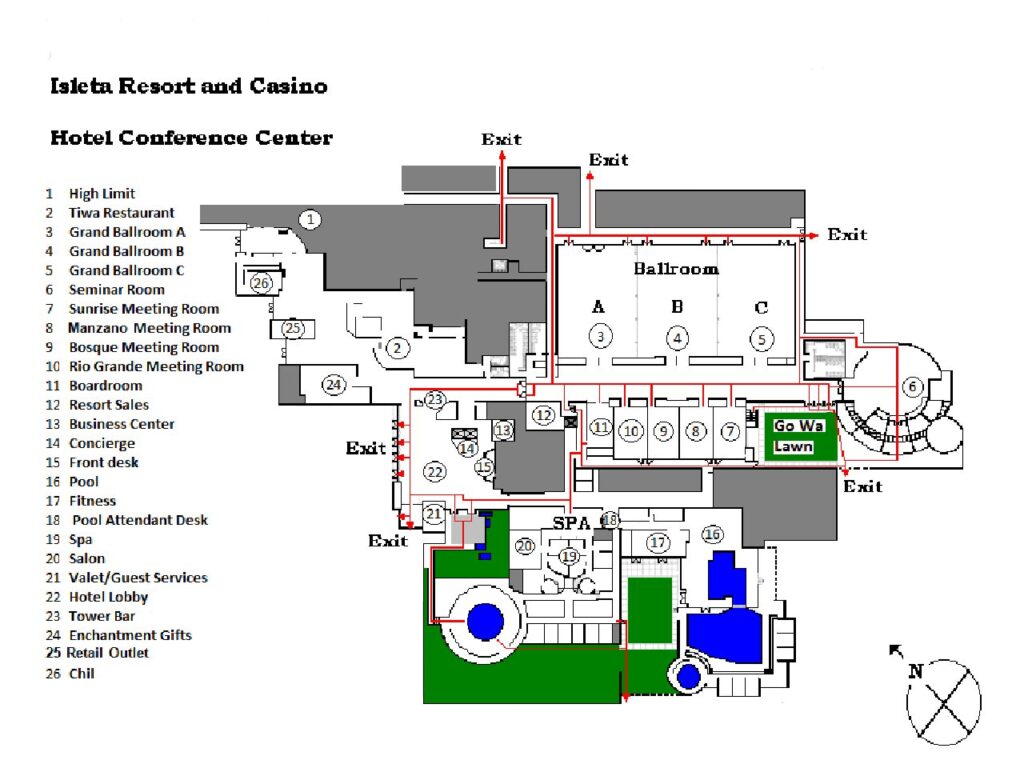
Conference Map
Evaluation Links
We highly value your feedback, thank you for sharing your experience.
Overall Conference Evaluation:
We invite you to share your reflections on the conference as a whole at the end of your time with us. Whether you attend one day or both, your feedback helps us strengthen future gatherings and continue supporting our communities in meaningful ways (Takes about 5 minutes).
Complete Overall Conference Evaluation
Day 1: Breakout Sessions
Please complete the evaluation for the session(s) you attended (2-3 minutes each).
Day 2: Breakout Sessions
Please complete the evaluation for the session(s) you attended (2-3 minutes each).
Conference Vendors
KWH Law Center for Social Justice
Visit website
Pueblo Action Alliance
Visit website
New Mexico Commission on the Status of Women
Visit websiteClient Services Director / Childrens Program Supervisor / Legal Advocate
Indigenous Women Rising
Visit website
First Nations Community Healthsource
Visit website
National Indian Council on Aging, Inc.
Visit website
Urban Indian Health Insitute
Visit website
Whole Self Counseling
Visit website
Valencia Shelter Services
Visit website
Mothers Against Drunk Driving
Visit website
CommonSpirit St. Joseph’s Children
Visit websiteSees Clearly Productions
Visit website
James Junes
Visit website
Parnall and Adams Law, LLC
Visit website
National American Indian Court Judges Association
Visit website
National Indian Child Welfare Association
Visit website
Southwest Women's Law Center
Visit website
American Indian Development Associates, LLC
Visit website
Community Health Education & Resiliency Program
Visit website
StrongHearts Helpline
Visit websiteOther Conference Activities
Wellness & Support Offerings
To support rest, care, and connection throughout the conference, we are offering:
- Complimentary massages provided by Brandi Lucero – Black Corn Remedy Massage on April 7, from 9:00 AM – 3:00 PM (availability is limited and offered on a first come, first served basis)
- Located in Grounding Room (Rio Grande)
- Visit Brandi’s Site here: https://blackcornremedy.square.site/
- Located in Grounding Room (Rio Grande)
- Therapy dogs on-site for comfort and grounding on April 8, from 10:00 AM – 11:30 AM
- A Grounding Room available during all conference sessions, offering a quiet, sensory-supportive space with access to cultural healing medicine
Advocates will be in attendance, and CSVANW trauma-informed staff will be on-site throughout the conference. If you need support or someone to talk to, please visit the registration/information table for guidance at any time.